
Can We Rewild Ourselves?
Regaining what we lost in the online world

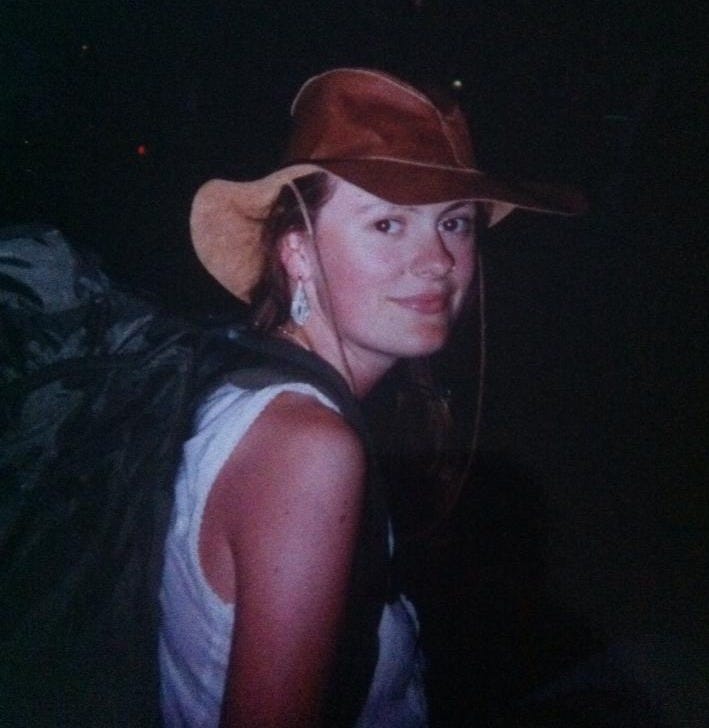
I was recently in Paris, a city I’ve visited many times. A city I adore. Or at least, a city I tell myself I adore.
Because this time, I didn’t really see Paris at all.
I was late for a meeting, sprinting through the 15th arrondissement, eyes locked not on boulevards or bakeries but on a glowing blue dot. I trusted the Google Map path to decide for me. My only real act of observation was glancing up occasionally to check that the physical world vaguely matched the digital one. Honestly, I could have been anywhere. Any city, any country, any business trip from the past twenty years.
Arriving on time, with the sense I’d lost something.
A few hours later, on the Eurostar home, I couldn’t help reminiscing about the first time I went to Paris on a school trip. Was that the late 1980s or perhaps the early 1990s? Either way, I had no smartphone, no social media, no skills, no sense, and no credit cards. The only camera I had contained a single roll of film. It’s almost unthinkable now.
I was untethered, adrift with nothing but my wits and a flimsy map. A feeling few folks under 30 will ever feel.
What do we lose when we allow our phones to guide us, decide for us? When we allow the internet to judge, organise and pre-book every step of our adventure through the world?
The average adult now spends over 3.5 to 4 hours per day on their smartphone. Among younger users, it is often terrifyingly higher. In the UK, Ofcom reports that on some days, 16–24-year-olds spend more time on their phones than they do sleeping!
And research from University College London shows that constant GPS navigation reduces activity in the hippocampus, the brain region associated with spatial memory and navigation. In other words, the more we follow the blue dot, the less capable we become of finding our own way.
The rich ecosystems of our experiences are being concreted over. We’ve exchanged comfort for adventure
How Do We Get It Back?
There is a word that is becoming incredibly popular in sustainability circles for what we need to do to brownfield sites and disused farmland. It is called rewilding.
Of course, many of us have become obsessed with the cute badgers or the slightly terrifying wolves that are being reintroduced into the UK. To me, that rewilding does not feel like going back, because that is not possible in our new world. Instead, we’re adding some wildness into our otherwise increasingly concrete, controlled world.
And that is perhaps what I miss about being a teenager, lost in Paris with an upside-down map, going into a Tabac to ask the grumpy proprietor in (utterly appalling) French where I was.
Or traipsing from hostel to hostel in Athens with my friend, bowed down by giant backpacks, aged just 18 (the photo above). With our Let’s Go Greece clutched in our sweaty, terrified hands, trying to find somewhere to sleep that night.
Or attempting to decipher train schedules from the clackety-clack of the giant signs above me in Germany. Or even the fact that postcards were not a delayed, silly and old-fashioned tradition, but the main way that you told the folks back home that you were still well.
What I miss, as someone who remembers life before the internet, was the joy and terror of uncurated discovery.
Nowadays, I don’t just decide where to eat in a foreign city based on online reviews. I even check the menu before attending.
That wonder of discovery has been replaced with the comfort of knowing.
So how do we add more wildness to our lives?
Don’t get me wrong, there are multiple advantages in our online world, especially for women. My adventures as a teenager across Europe were wonderful for me, but of course, terrifying for my parents.
So I am not suggesting that we throw our phones into the nearest river and run off into a world that assumes you have a phone and no longer provides information in any other material form.
But perhaps we can try to find everyday adventures.
Even if that means trying a different route from home to work without checking your phone at every corner. Watching the clouds overhead. Getting to know a local tree extremely well and watching its seasonal changes.
Taking an hour in a foreign city to just walk and wonder, and get gloriously lost, knowing that if you must, the phone in your pocket will immediately pin you down to your exact spot on earth.
Heck, even going barefoot occasionally might lead to the discovery of senses that you did not know you had.
There are more intentional versions of rewilding your life. Learning about the land you live on. Wild gardening, native plants, growing your own food. Taking phone breaks or even a one-week social media detox.
Some spiritual practices even recommend discovering the adventure within your own mind.
At the very least, today I am going to put my phone down and perhaps even risk going for a walk along the South Bank, steps I know intimately and have taken hundreds of times before, without taking my mobile phone with me.
The 18-year-old Soli in the photo above would do so without hesitation.
Wish me luck.
****************************************
Looking for a wild adventure? Try Godstorm
If you’re looking for wildness, my story about a gladiator turned governess will hit the spot! Buy in all good UK bookshops (ebook and audiobook online)
Plus, Godstorm is coming to the US and hope you’ll hit that pre-order button today:
Stay tuned for more info on US launch events and signings.
This post brought me back, way, way back when, among other things, and without knowing it, I was truly living one day at a time.
Spot on. I did this in London recently - ie walk to a meeting without using my phone. It took longer and I went a route that was 'less efficient' but I felt better for doing so, plus noticed actually using my brain muscles!
I try to do a little rewilding of self every week, ideally every day.